
By Christine Swan
I don’t often write about my day job in the blog, but I felt compelled to write down my feelings and reactions to the announcement of a ban on under sixteen year olds joining and using social media platforms.
In my capacity as a teacher, I agree that social media has no place in school and for many young people, the net effect is harmful at worst, and a distraction at best. I salute the bravery of the group of parents who lost their children, in pressurising for action to make lives better for young people and to help to keep them safe online.
A school pupil once said that social media existed to allow you to write things about people that you wouldn’t say to their face. I do not believe that this was a unique perspective. Young people can be exceedingly unkind to one another and may be unaware of how deep the barbs go. They trivialise insults as “banter” and claim that the recipient doesn’t mind, without so much as asking them.
I harbour a deep and profound hatred of bullying. At least, in my teenage years, an analogue telephone, attached to wall by a cable, could be unplugged, or answered by a parent who would give short shrift to anyone disturbing their evening. A telephone bully would have had their work cut out in the days before digital.
Now, it is easy to connect, and contact one another constantly. For me, this is great. I keep in touch with relatives living anywhere in the world, instantly. This connection has been a very positive experience and I am delighted to exchange small talk with over a thousand miles between us . I can always find something to giggle at online – a cat doing something silly, a video clip of pet ducks eating peas in a bowl of water, or tips on how to make your white training shoes regain their brilliance. What’s the harm in that? Of course, the answer is nothing.
I am interested in fashion, jewellery, interesting hairstyles and colours, British wildlife and wildflowers, gardening, cats, cats, and more cats. Social media algorithms show me more of this content, and the more I click and the longer I scroll, the more I see. My timeline is a wholesome mix of colourful, beautiful clothes, unique styles and delightful animals. Scrolling for me is a moodboard of joyful ideas, and interesting conversation. It can be a waste of my time, but I can manage this. If I don’t have time to scroll or comment, that’s not a problem.
Young people often don’t have the ability to control their scrolling. Whatever they are viewing, the algorithm will show them more. If this is harmful content, there is no escape. I watch fellow travellers on my daily commute. A small number will get out a book, stare out of the window, or even do some knitting. But far and away the largest number of commuters are looking at their smartphones. They are scrolling, scrolling, scrolling and then scrolling some more. I am reminded of the child-friendly robot called Johnny Five from the film Short Circuit. I wonder how they can focus so quickly. The truth is that fast-paced content switching appears to be detrimental to brain development and is linked to increased levels of anxiety and behavioural dysregulation. Content is designed to capture attention – but not for long.

Johnny Five from the popular film Short Circuit – By Rik Morgan (Rik1138, http://www.handheldmuseum.com) – http://props.handheldmuseum.com/AuctionPics/Johnny5_03.jpg ; Originally from fr.wikipedia; description page was here., CC BY-SA 1.0, https://commons.wikimedia.org/w/index.php?curid=2693174
This week’s ban on the use of social media by under sixteen year olds, I feel, is largely symbolic. I wished that I felt more positive about the intentions of social media companies, but I do not. Accounts supply a constant stream of useful data – who likes what, how long they stared at it, how many times a video was watched, who clicked to see more, and what kind of users are they. Children can be exposed to harmful content, and the Ofcom annual media use and attitudes report 2026 found that young people said that 88% of nasty or hurtful content was online. Whilst some social media companies are taking some steps to remove harmful content, they have created a behemoth that I believe is out of control.
Banning mobile phones in schools has become common practice. Where pupils have them in their bags, the temptation is to use them. As an example, while I was waiting in a school reception, a mother had brought her daughter’s PE kit into school after her daughter had rung her. The receptionist explained that phones were banned in school and that wouldn’t have been possible. The mother then said: “Well she has just messaged me to say thanks”. However, a clear policy does help everyone. Phones can be a battleground for teachers. Confiscation can lead to confrontation, an outright ban simplifies the rules.
I am a little concerned about the “you can’t” nature of the solution and for many years I have advocated for tackling the beast by taming it. Banning something can make it more delicious and a challenge to workaround. Some of young people’s use of mobile phones is indeed beneficial – to their education and also their well-being. Parents also can see the benefits to their children’s lives. It is easy to see only the negative influences and mindless scrolling. Are we teaching young people how to use mobile phones for good? How to be a good friend on social media, how to learn a new skill, how to use apps to manage their time, how to find reliable sources to help with homework. More young people have access to a mobile phone than another device, such as a laptop.
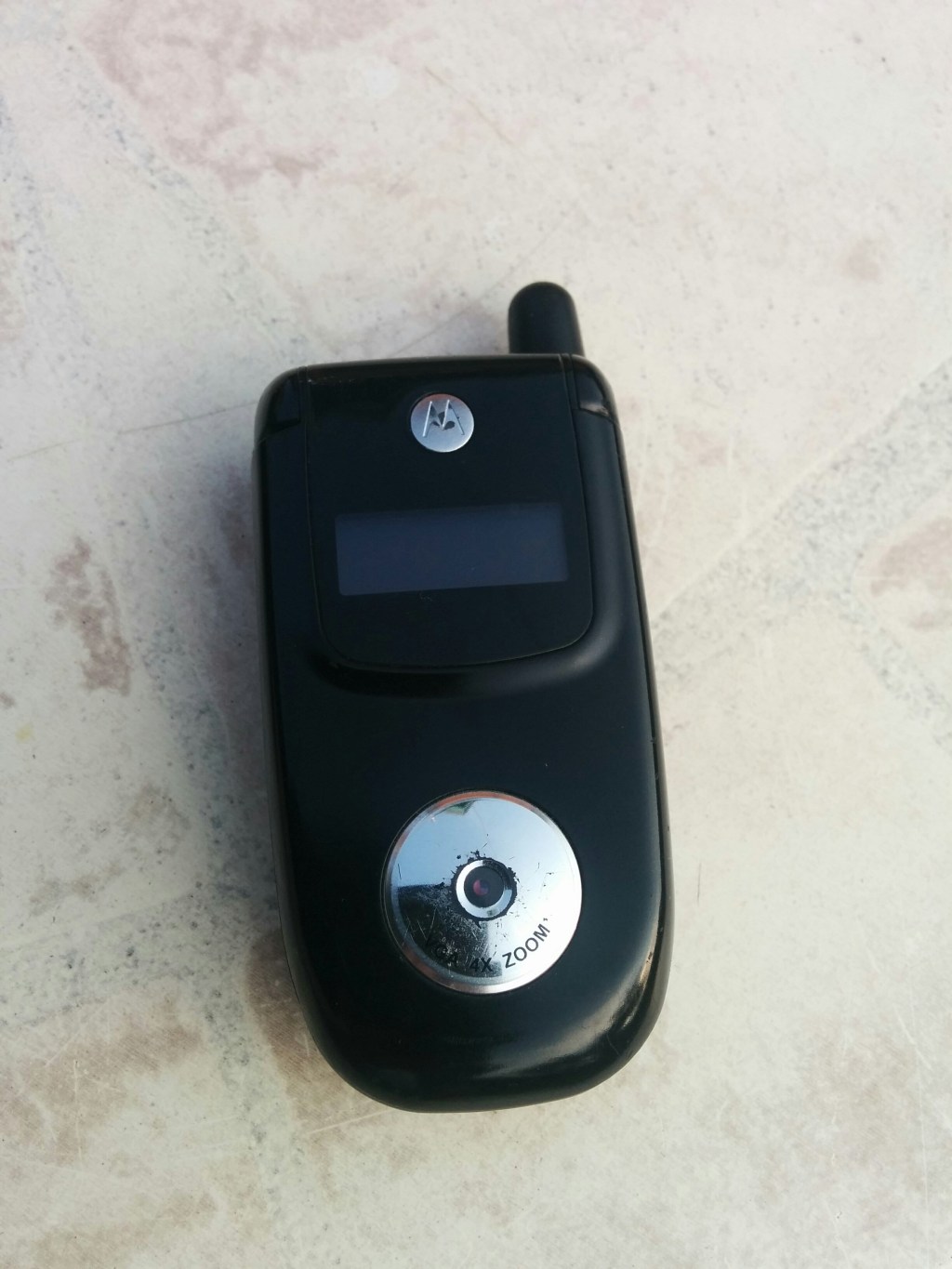
The image at the top of this post shows the first phone that our children had. By modern standards, it is incredibly limited in terms of functionality. I say “is” because I still have this phone, and it still functions, as far as I am aware. Access to scrolling content was limited by a tiny monthly data contract that led to judicious use to maximise use. In contrast, modern data plans are essentially unlimited allowing unregulated use.
Whether the social media ban for young people is successful remains to be seen. I would like social media companies to wake up and take responsibility to remove harmful content. They made this monster and they need to tame it. I hope that we can improve the quality of content online that is aimed at young people and, although their engagement is much more passive currently, to enable them to be content creators, by teaching app development and how to use social media within a business setting to promote a brand.
If we are taking things away from young people, we need to give them something back. The final part of my wishlist would be to reinstate youth clubs, to recruit youth workers who will turn lives around, and create meaningful social interactions between between young people in real life. In my experience of youth work, I cannot speak highly enough of the dedicated team that I worked alongside who created such rich and meaningful experiences, coming up with creative and fun ideas every week (Becky, I’m looking at you!)
More information
Ofcom report in parents’ and childrens’ attitudes to media 2026
The government’s social media ban plans
UK Government – screen time impacts on education and well being


