

by Christine Swan
I will that I love buying clothes so it was with a degree of scepticism that I read a newspaper article recently about yet another perfect capsule wardrobe consisting of twenty basic items. Black, white, grey.
I do wear quite a bit of black and some items just have to be white – such as the perfect summer t-shirt or long-sleeved business shirt. However, let’s face it dear reader, the monochrome palette can be dull. Are colours and patterns to be shunned? Dear reader, not on my watch!
So, here are my recommendations for the perfect decapsulated wardrobe that can be as large or as compact as your heart desires, or budget permits, However, as a caveat, please add a huge pinch of salt as I am certainly not qualified to advise anyone on how to dress.
Everybody needs to have a wardrobe that is appropriate for their daily lives, so if you have horses to muck out, dogs to walk, gardens to dig, and rooms to paint, wear what is practical for these activities. I do endorse the “one hundred wear” philosophy – that is, before you purchase any new clothes, ask yourself if you are going to wear it for at least one hundred times. That’s only a third of a year of dog walks, so of course you will wear that raincoat! This is good sense because we all need basics for however we live our lives. They should be tough, and up to the job. Old items will have descended through a hierarchy of perfection down to the most lived-in to do the most living in.
I remember my childhood as a time of wave after wave of original fashion and trends, where young people expressed themselves and found their crowd through their garb. Flares, huge collars, bright colours, bell sleeves and bottoms, mini, midi, maxi and so much velvet. Later on Punks and New Romantics, jostled for attention on the Kings Road. When I began studying in fashionable Chelsea, I was fascinated by people with the confidence to express their individuality and style through their clothes and appearance. Categorising people into sub-cultures seemed too crude a measure of style. I began to appreciate that I could draw inspiration from my daily shifting mood board, and could pinch the ideas that appealed, but still add my own stamp.
As an impoverished student, I acquired a pair of military fatigues and a battered old Harris Tweed jacket that had doubled as a theatrical prop. I paired this with a huge, white frilled shirt and gold ankle boots, I purchased the latter in a sale and they were surprisingly comfortable. With my huge head of painstakingly crimped hair, I could hold my own with the fashionistas of the Kings Road despite my entire outfit costing less than £20. In fact, I would still wear the same outfit today (I still have the jacket).
Let me return to my original thread: what should be in a perfect decapsulated wardrobe? As well as the essentials for dog walking etc., you should buy and wear what you love. If you love it, you will light up, and those around you will notice. You look great and you know it. You do you, and not anybody else’s expectation of who you should be. We should all be driven by what makes us feel good. Budget can be seen as a constraint but thrifty shoppers know that a good purchase will stand the test of time, and that you don’t need to buy items new. I still have the original Harris Tweed jacket and purchased another in a different fabric and larger size, for £5 from my local Cat’s Protection League charity shop. It is having a new lining this year, which I will stitch from hardwearing Liberty print furnishing fabric, bought as a sale remnant. Well made, quality clothes can be reimagined many times over and I adore my jacket.
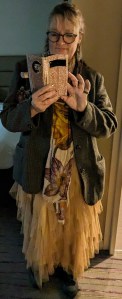
My Harris Tweed jacket
You may spend several months browsing before you find “the one”. This piece can act as a focal point around which everything else is built. As we wear coats on the outside, a fabulous one will create a first, but lasting, impression. You may feel pressured into buying black, navy or grey – but stop right there! In the winter months, devoid of sunshine, and with darkness early and late, we should strive to be seen. I possess a high-visibility, waterproof coat for walks to and from the station. It helps to keep me safe so is very practical. I also possess a huge, shaggy, faux fur number in baby pink, with a psychedelic lining and diamante buttons. It’s not waterproof but you certainly can’t miss me.

A fabulous coat is a must
You may be thinking that you don’t have the self-confidence to wear a bright colour, pattern or unusual fabric, but you can start small. Perhaps try an accessory such as a scarf or necklace? The key element in my philosophy is to wear what is joyful to you and expresses who you are. It doesn’t matter how tall you are, your size or age. Everyone can wear patterns and colours and, if asked, most people express a preference. One of my favourite colours is turquoise.
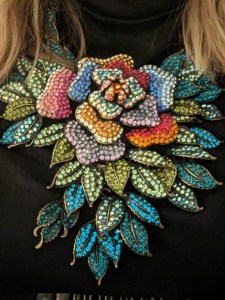
A fantastic piece of costume jewellery adds colour in a smaller dose
Another element of my sartorial suggestions, is the philosophy of layering. The UK weather can be highly variable, even within a single day. Many items of clothing can be put to service the year round by adding or removing additional layers. Today, I am wearing a summer dress that I last wore on holiday, with a t-shirt and white jeans because it is still August but a tad chilly and may rain. One winter staple that I wouldn’t be without is a black cotton roll neck top. It goes underneath as a base layer and extends my ability to wear things that I love into autumn and beyond. They last well but even if they fade, it matters less for a base layer. I also buy plain white t-shirts as lighter base layers, or to wear in the summer months. I buy white because when they begin to turn the colour of chewing gum, I can bleach them. A black roll neck and white t-shirt will suit everyone and looks great with a suit or with jeans.
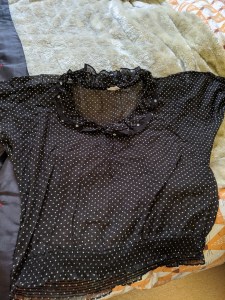
I bought this cotton top for an 18th birthday party and still wear it.
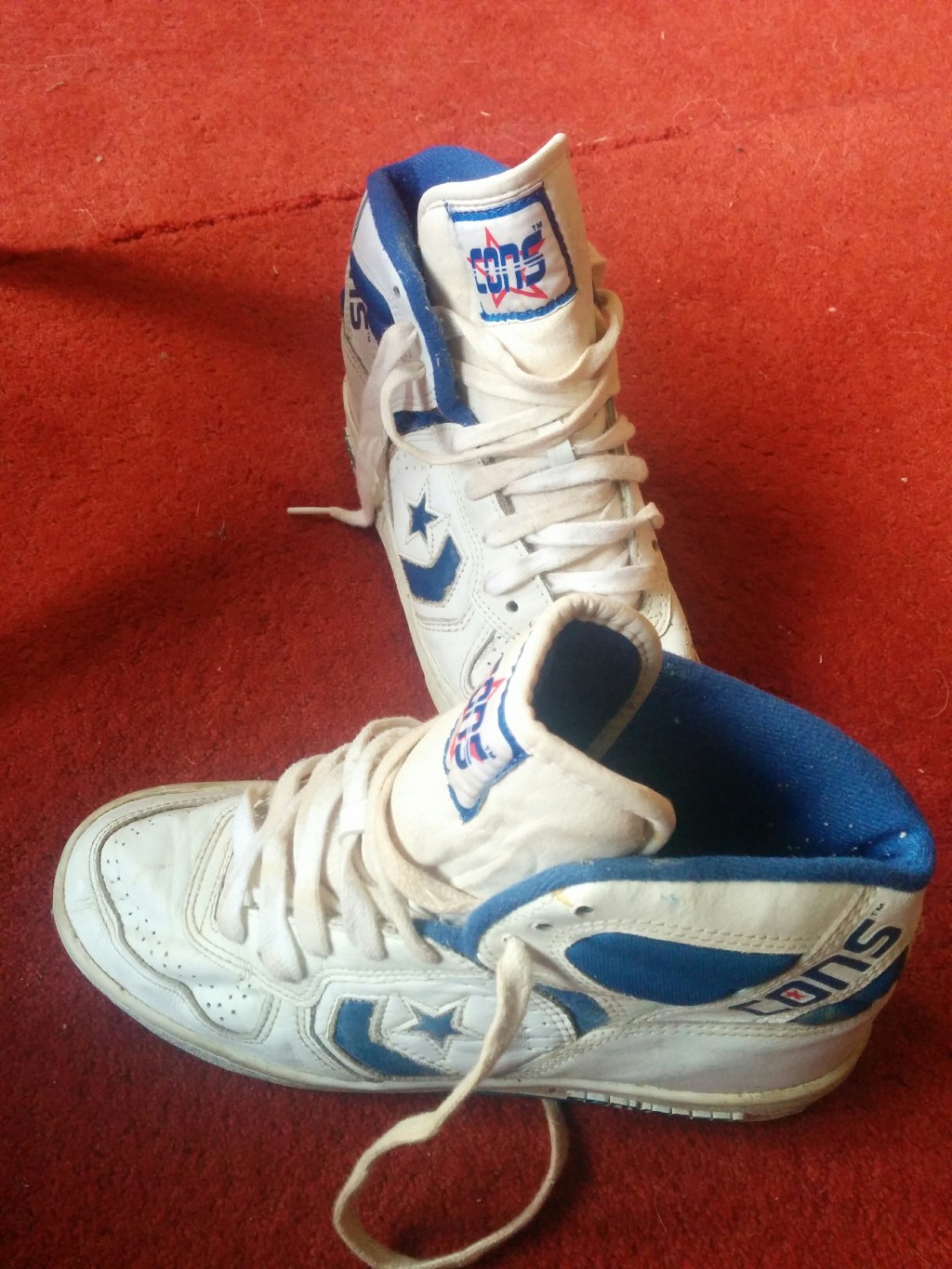
I do possess quite a few pairs of shoes but some do get worn more than others. Getting older forced me to abandon my heels, which I donated to a charity, in favour of flats. After attending a wedding wearing a beautiful pair of sky-high silver sandals and suffering with knee pain for days afterwards, I realised that my penchant for impressively high footwear was doing me physical harm. I now live in comfort and the greatest of all can be found in my running shoes. Years of wearing heels with minimal padding could have caused permanent damage but I feel that my knees have forgiven me. A good pair of running shoes will not be cheap but I cannot put a price on being pain-free. I wear mine anywhere and everywhere but even this can be a statement as any self-respecting sneaker collector would know. I have a pair of late 1980s Converse basketball high tops that I used to play the sport in and never wore them off court. I have accepted that my playing days are well and truly over so, they have become street shoes. I receive a high volume of comments whenever I wear them and it makes my day. My ancient basketball boots are a style statement, who’d have thought it?
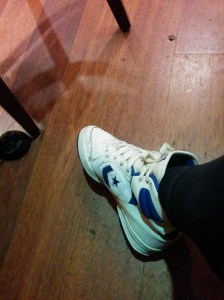
Forty years old and still in style
Accessories can also be deeply personal and many evoke special memories. It doesn’t matter if the material is platinum or plastic, it is precious to you. Wear it to remember, wear it with pride, to show your love of others and also of yourself. It would be awful to own something that just stays in a box, in a drawer. It goes without saying that the best accessory of all is a smile – and that’s priceless.
All photographs by the author
Where to buy
Blue Cross – https://www.bluecross.org.uk/shop-online
Cats’ Protection League – https://www.cats.org.uk/shop
Dogs’ Trust – https://www.dogstrust.org.uk/support-us/our-shops
Oxfam – https://www.oxfam.org.uk/get-involved/shop-with-us/
Shop with Crisis – https://shopfromcrisis.org.uk/
Sue Ryder – https://www.sueryder.org/shop-with-us/
Vale Wildlife Hospital Charity Shops – https://www.valewildlife.org.uk/charity-shop/
This is not an exhaustive list – please support your local charities

