
By Christine Swan
There are so many things I love about France, it isn’t any wonder that I am drawn back every year. I love every part of France, but tend to be drawn south in the summer and north at other times.
There are several things that I have to admit, I find better than in the UK. It is irritating that many of these are easily adoptable or, were things that we gave up far too easily.
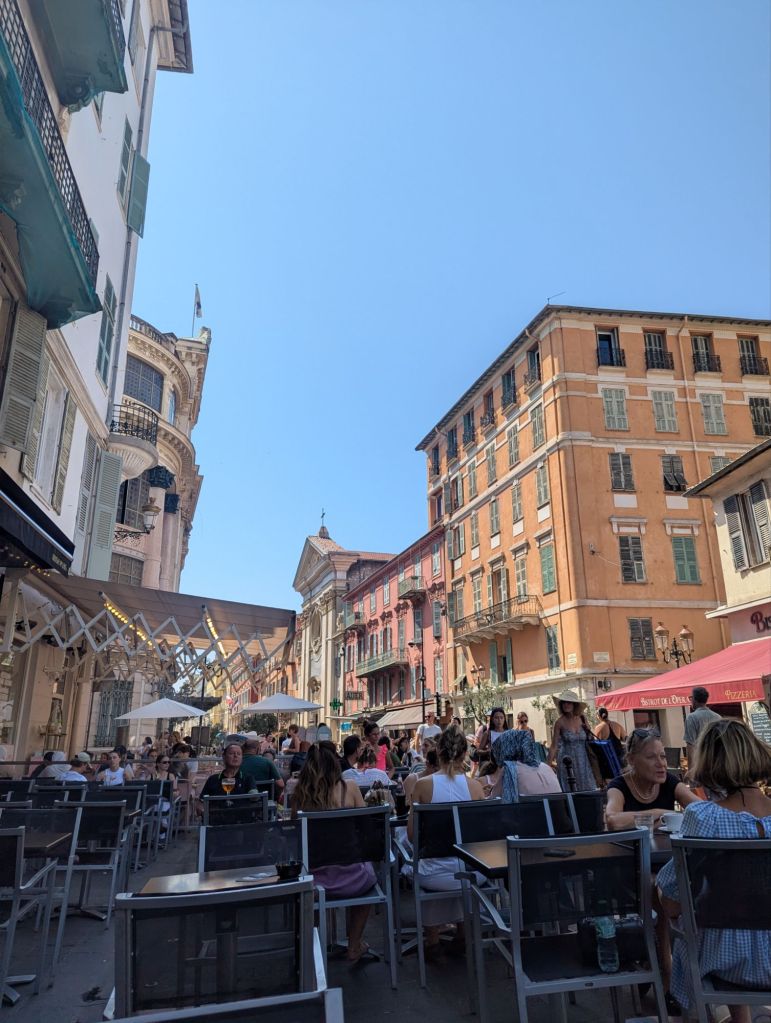
The first is decidedly French but, is something that we should consider. There is nothing better than sitting down, facing the street, enjoying un café and indulging in a spot of people watching, or immersing yourself in a good book. Bars serve beer and coffee. You don’t have to compromise. I never feel the need to visit a McDo or Starbucks in France. Why would I? I don’t want “fast”. Reading is not frowned upon, and I like to look at what books are being read by punters. Fridays see Parisian streets come alive with bars and street cafés filling the air with animated chatter. Groups of friends meet, drink, chat politics, and I love to catch snippets of conversation. I love to drink un Ricard, and I can even get that in Paris. The waiter smiles, ah, a crazy English person who has visited Marseille. Correct, many times.

We do have a partial café culture in the UK but councils should be planning for warmer summers, and less cold winters. Less car space and more dining space please. I am enjoying seeing start-up literary cafés, music cafés, chess cafés – more of this please. However, generally, we go to the pub for beer and a café for a coffee. Here, you can usually get a beer or glass of wine in a café too.
Another key difference between France and the UK is that waiting on tables is seen as a valuable job in France. You don’t queue for your coffee as you might in a work canteen, you are given individual attention. It isn’t usual to tip in France but I often give a pourboire in cafés and restaurants if the serveur is obviously a student and doing well. They always seem really pleased and I explain that I’m English and that’s something we do if service is good. It’s appreciated. We often lament that young people have less opportunities to experience the world of work before they acquire a full time job, and learn how to handle customers, money, and the expectations of professional conduct. What better way to learn? You may be wondering where the money comes from when a business could have a computer-controlled ordering screen, with card payment, and staff only have to shout “ORDER SIXTY SEVEN” for you to trudge and collect your canteen tray, and I will tell you about my experience of Betty’s Tearoom in York.
An elderly lady was dining on her own in Betty’s, as was I. My waiter asked if I was visiting and I explained that I was there for work but had time to kill before my train. The elderly lady’s waiter asked how she was and that she hadn’t seen her recently. The lady had been ill, and I gathered, in hospital. The waiter sat down in the other seat and listened. They talked in hushed tones, but the scene moved me, and I contacted Betty’s. This level of care was lovely to see. It doesn’t take much just to ask how someone is. I also witnessed this in the Commandery café in Worcester, a man was obviously going through a distressing divorce. The waiter saw his distress, went to the kitchen to sort cover, came back and let the man talk. She was a listening ear when he needed one, and it was lovely to see. Such talk saves lives, or makes them worth living.
So let us celebrate our café serveurs, pay them a living wage and value their work more. Let’s also embrace café culture, make space for it to thrive and create jobs for young people.
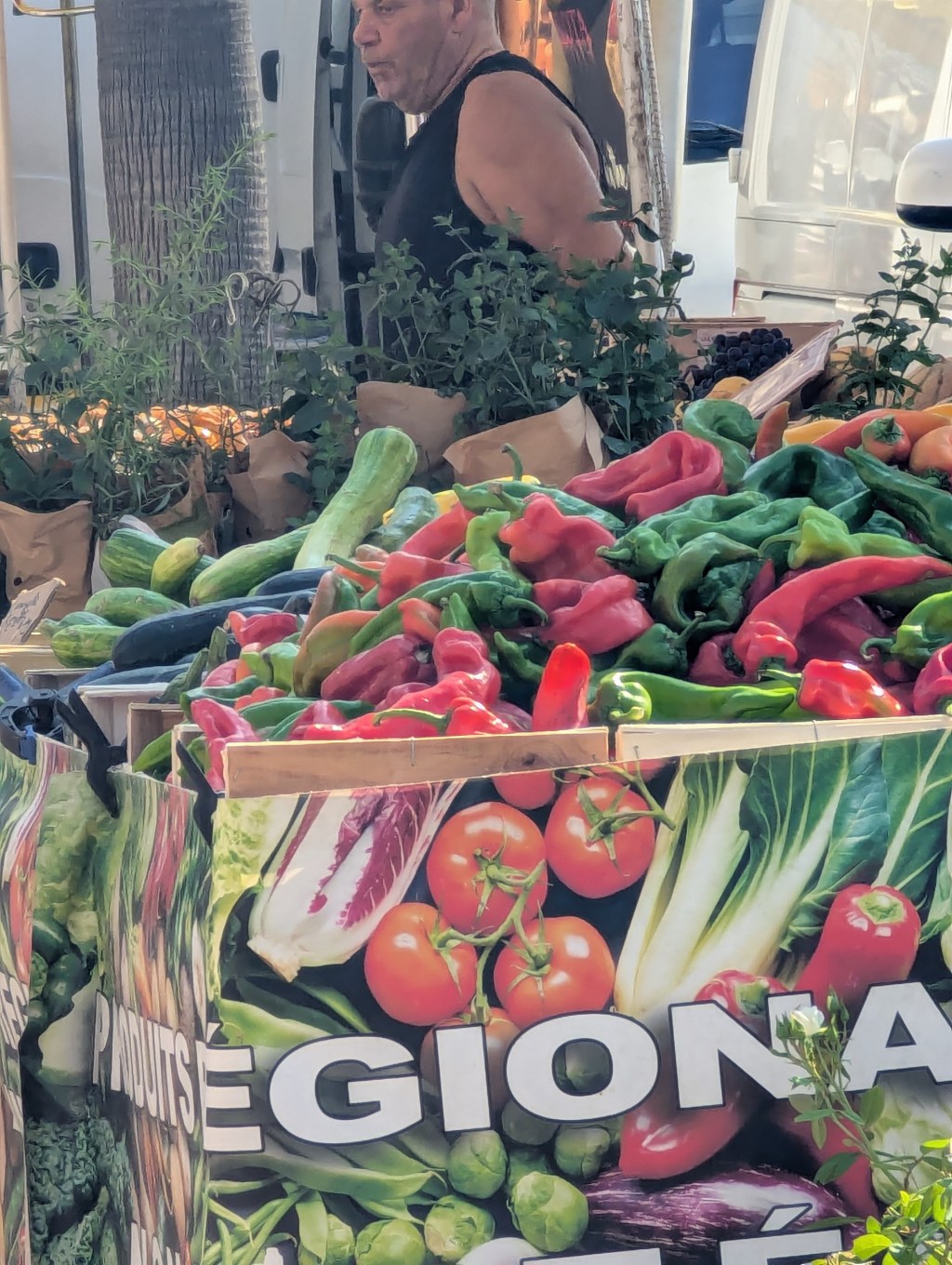
My next French tradition to adopt is markets, and you will likely respond that we already have those. You might be correct but, speaking for my adopted city of Worcester, they are neither of the scale or variety of French markets. The City, the local and national police, the vendors and shoppers, make French marchés a huge success. In fact, it isn’t just France, right across Europe, there are markets. Surely there are, or were, in England?
Imagine trying to complete a weekly shop at your local markets, and only using the supermarkets for loo rolls. I would return home with a glass candle lantern, some chilli sauce, veggie samosas, and a paintball experience. Our market sells, mostly, gifts and occasionals, rather than everyday products. Except the samosas.
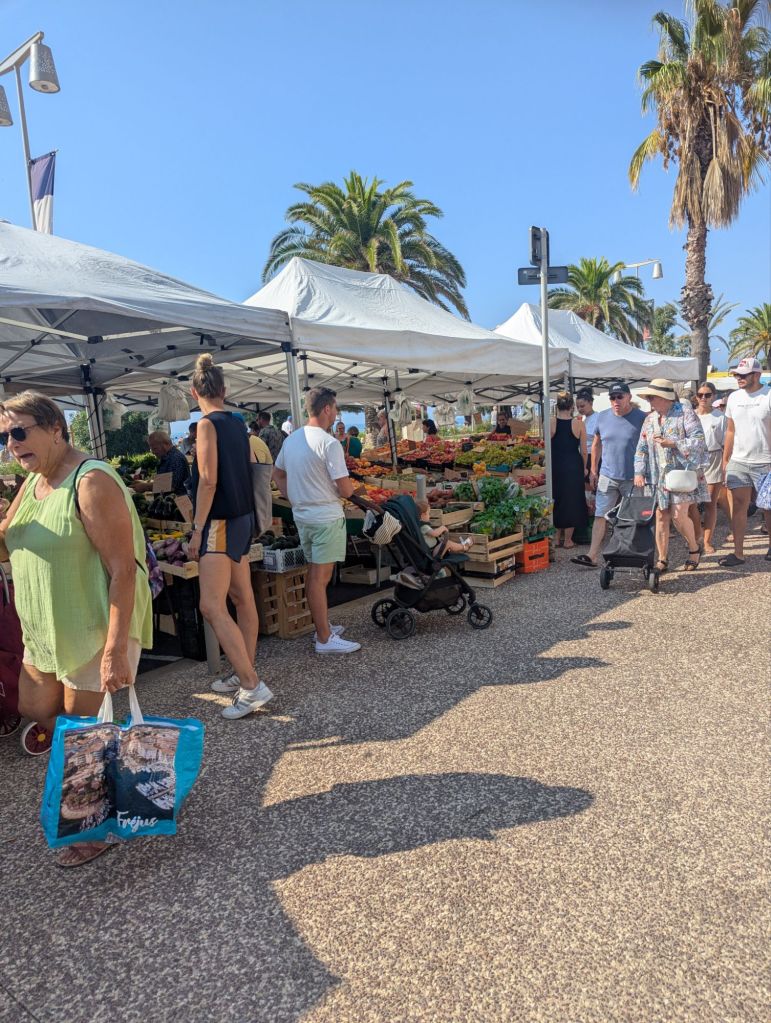
Where I am currently staying, in Fréjus, there is a market pretty much every day, and night. The later specialises in tourist trinkets and gifts, but the former is where you do your weekly shop.
There is a dizzying variety of fruits, vegetables, herbs, spices, sauces, bread, cakes, paella cooking in huge pans, cheese, honey, nougat, olive oil, wine, beer, and whole cooked meals to take home.
In this region of France, many of the products have only come a few miles, and the markets give small sellers a regular income as markets are scheduled around the region on different days. There are also themed markets on different days, including antiques and collectables.
Thinking back to my childhood, markets used to be in much bigger spaces. I can visualise Dartford market, but cannot remember Whitecross Street market, where I lived as a very small child. Worcester markets have shrunk in size and changed in terms of products. I read that access to power was an issue for some traders. Here in Fréjus, this seems to be part and parcel of your pitch and the whole setting up and tearing down, is an organised, and regular dance, with traffic management enabled by the police.
When did we give up our general markets? After my experience here, I am adamant that for traders who cannot, or do not wish to buy or rent a shop, markets enable small start-ups to get going. Governments lament about how to put rockets under the economy, and to solve the issue of NEETs, here is an idea – give start-up grants to young entrepreneurs. Schools organise Young Enterprise competitions, and we enjoy entertainment spectacles, such as the Apprentice, where, one-time market trader, Lord Alan Sugar, coaches young people to design, pitch, and sell, a product or service, not of their choosing. Young people need to understand the economics of buying, making, and selling, and markets are a way of getting started. The market model is very successful here because it’s a cultural norm too. If only we could get back this in the UK, and stop promoting supermarkets as the only place to shop. Here, supermarkets are seen as second best to markets. If you care about the food you eat, it should be fresh and local as far as possible.
I don’t care about eating strawberries in December, and we should learn to embrace seasonal eating. Another thing that France does better is the number of small foodie outlets. The French do not as a rule, buy bread from the supermarket. There is usually a boulangerie every few streets. Look for the queues – they are the good ones. Be cautious about Google reviews as they don’t always present the full picture. Similarly, there are boucheries, epiceries, and patisseries for your delight in every town.
When I recently visited Antwerp, I was blown away by the number of chocolate shops. Do the Belgians really eat that much chocolate? Evidently!I also found the best boulangerie in Antwerp, and the oldest. I bought a cannonball loaf, which was a delicious, rye-based, boule-shaped, wonder. Of course, I spotted this bakery by the queue – it tells you all you need to know about a shop’s wares. I have to confess that we are blessed in Worcester, with the wonderful Peter Cooks Bread, who produce the very best of artisanal breads and cakes. Yes, hand proved bread is going to cost more and this is the dilemma – do we only want out of town supermarkets? Or do we want a lively High Street with shops selling quality products and supporting local people. Money flows straight back into the local economy, rather than big businesses.
When High Streets come to life, more people care and the environment improves. Keeping streets clean, preventing vandalism and graffiti does cost money. Many councils are very short of cash, maintaining a police presence is costly and the workforce is stretched. It seems impossible, but we need a plan. While I have been away, in Worcester, teenagers attacked a shopkeeper who would not sell them vapes. It’s easy to throw our hands up and say we can’t. All we need to do is to begin to change, one little bit at a time. I see here in France a constant effort to make things better, to support small local businesses. La vie en rose? Maybe.


Leave a Reply