
By Christine Swan
This week I objected to the latest proposed plans to ruin Liverpool Street station, the deadline for which was today. As I was writing my witty but pointed piece, I started to think about how I could strengthen my argument. How can we preserve the past, yet still make it fit for purpose in the twenty first century? Am I advocating that we turn our historic cities into tourist theme parks rather than functional places where people live and work?
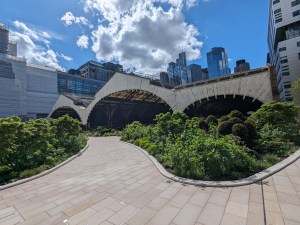
Exchange Square leading to the train shed at Liverpool Street Station – elegance and accessibility
I find social history fascinating. I feel crestfallen when I visit a site where one of my ancestors lived, only to find that number 55, the house that I am looking for, is now a modern apartment block. It is always the number that I am looking for that is either missing, modern or boarded up.
As I penned my objection, I began thinking about recent trips that I had undertaken and how these cities had managed to meld the traditional features with modern need. I also considered views. How can we enable visitors to have an uninterrupted view of major landmarks? Paris, everything about it is just perfect. The Parisians would not allow an ugly slab to be plonked on top of the Gare de Lyon with its beautiful Le Train Bleu restaurant, submerging it forever into darkness – Non!

Gare de Lyon ready for the Olympic Games in 2024
If London isn’t careful, it’s going to become a mish-mash of styles where office space takes priority over cultural. Back to Paris, please. Here’s where Paris has it right. There is an appreciation of the need for architecture to create views, to frame its most wonderful buildings and celebrate their magnificence. I sat for an hour watching workers restoring Notre Dame, on staged seating, provided for the purpose. Everybody was invited to appreciate the craftmanship being drawn upon to honour this iconic landmark. I cannot imagine this happening in London.

Notre Dame being restored is a spectator sport
On contemplating the approach to iconic buildings, Royal London frames Buckingham Palace and the Victoria Memorial from the Mall at one end and Admiralty Arch at the other – that’s the way to do it.
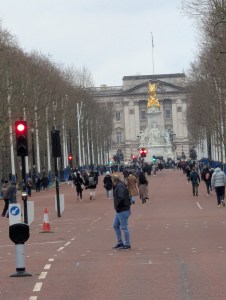
The Mall frames Buckingham Palace and the Victoria Memorial
Wandering up Watling Street, that ancient Roman way that passes through the City of London, the cobbled street gives way to an incredible view of St Paul’s Cathedral. Architects and planners should consider how we approach these iconic landmarks, to show them at their best, to demonstrate our pride in our architecture.
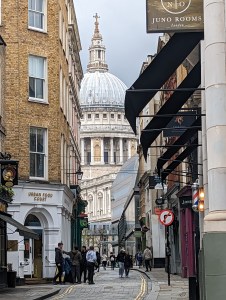
St Paul’s Cathedral leans in towards you as you approach from the ancient way of Watling Street
Sometimes, buildings aren’t looked after. They remain unloved, unoccupied, redundant. Their past glory is tarnished and faded. It is heartbreaking to see. A prime example is the Whitechapel Bell Foundry. Plans were submitted for a boutique hotel, but when these were refused, it fell into graffiti-covered abandonment. When I visited last year, to update my collection of photographs, an American tourist was interested in my attention and asked me what the building was. I told her about the bell foundry that cast the Liberty Bell, Big Ben, and those of Westminster Abbey. The tourist was astounded, but I was embarrassed. How can we be standing together in front of scruffy, vandalised wooden panels, and talking of its grand past. How could this happen? Exactly, how could it. It seems that no matter how hard we try, there is always something to thwart us. An owner who won’t sell, a local authority that won’t insist.

The lamentable condition of the historically significant Whitechapel Bell Foundry
Despite my pessimism of not being able to find buildings once occupied by my ancestors, rarely, I hit the jackpot. Thus it was with 24 Curtain Road, home to the intriguing John Deighton, bone boiler of Shoreditch. Within a stone’s throw of the site of Shakespeare’s Curtain Theatre, this little house, one of a pair, still stands. Just. Its other neighbour is an immense expanse of glass and steel, and beyond that, more glass and steel. Here, land is exceedingly valuable, one square meter of soil is estimated to be worth over £17,000. How can a little property survive against the march of the skyscraper? The answer is that I’m not sure if it can. I go and check on 24 Curtain Road whenever I can. I can not afford to buy it, but maybe, tucked in its little corner, it may be forgotten about, and left alone.
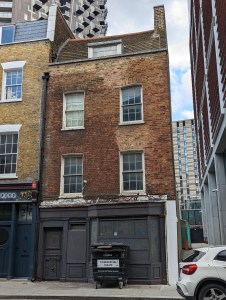
24 Curtain Road, where John Deighton boiled bones in the 1860s
I began by talking about Liverpool Street Station. I can remember passing through it as a child and all that I can remember is that there seemed to be so much walking, and that my legs were tired. Later it became my main link to the capital from my home in Essex. I trundled past Bethnal Green, Weavers’ Fields, and spent happy Sundays buying things I didn’t need in Petticoat Lane, and yet never did I realise that I had such a familial connection with these places.
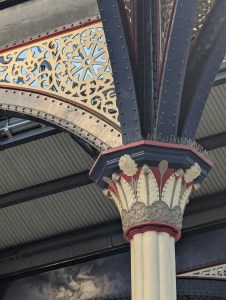
Look up – beauty is all around. Buttress detailing at Liverpool Street Station
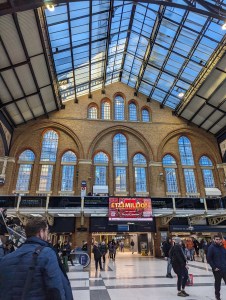
Liverpool Street Station is a cathedral of rail transport, but unlike Notre Dame being rebuilt, plans intend to demolish parts of it
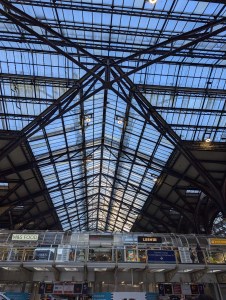
How can something this beautiful be taken away?
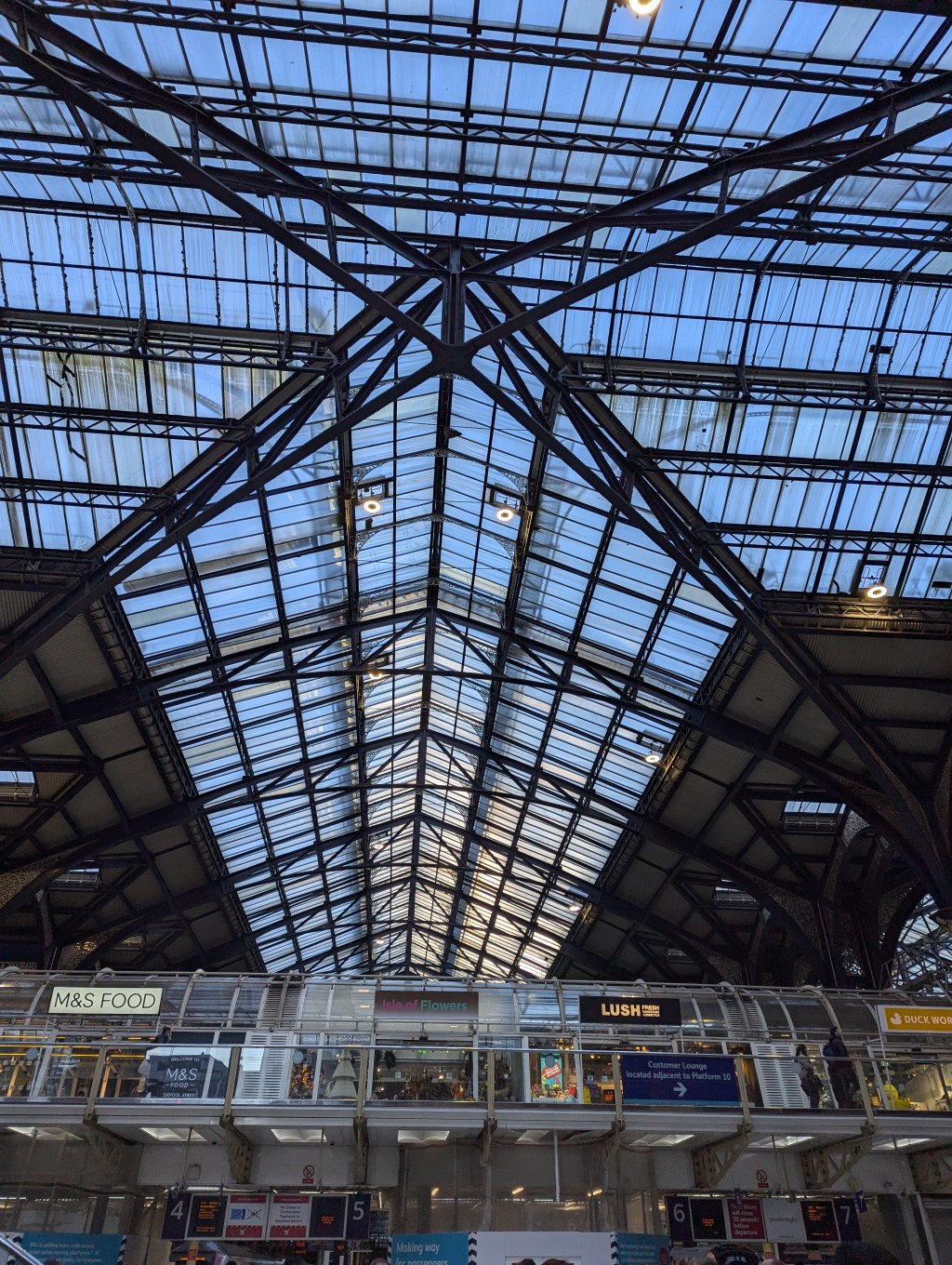
Now that I have established where my roots spread from, I have visited it much more frequently in recent years. In the winter, I like to look up at the night sky. The roof is incredibly beautiful. Every support is ornate and noteworthy , and the span almost seems to defy gravity as it elegantly soars over your head. During the summer, commuters are bathed in sunlight and dazzled by the intense blue of the sky. I am not the only fan of Liverpool Street’s roof:
“Through crystal roofs the sunlight fell,
And pencilled beams the gloss renewed,
On iron rafters balanced well,
On iron struts; though dimly viewed.
With smoke o’erlaid, with dust endued.
The walls and beams like beryl shone,
And dappled light the platforms strewed
With yellow foliage of the dawn
That withered by the porch of the day’s divan”
John Davidson
More information
The Victorian Society – https://www.victoriansociety.org.uk/
The London Bell Foundry – https://www.thelondonbellfoundry.co.uk/


Leave a Reply