
By Christine Swan
Some theatre is enjoyable, but not personal. Some is frivolous fun, but lacking in a deeper message. Having East End ancestry, Cable Street has a legendary status but maybe it has been forgotten and we need a reminder.
I really looked forward to the first production in February 2024 at the Southwark Playhouse. My theatre-going companion was less convinced. The second run was staged at Southwark Elephant in October of the same year. I had a slightly oddly positioned seat for the second production but I still enjoyed it immensely. Most recently Cable Street the Musical has been performed at the Marylebone Theatre, which is housed within the fascinating Rudolf Steiner House. With a change in the principal characters, both gave a good account of themselves, and every iteration brings greater polish, a more refined set, but an enduring story and sing-along tunes.
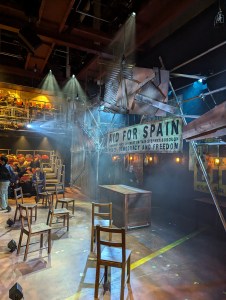
The set of Cable Street the Musical as staged at the Southwark Elephant in October 2024
After my mother suffered two strokes, that rendered her partially paralysed, we had plenty of time to talk over cups of tea. She would remember periods of history when she was a child in the nineteen twenties and thirties. She remembered being scared of Oswald Mosley’s blackshirted British Union of Fascists, who regularly intimidated East End residents. My mother remembered them distinctly echo the politics that was also spreading across Europe as a backlash to the Great Depression and looking for somebody to blame, As ever, the gaze was turned to “people not from around here”. Mum saw the build up of fascism both in the UK and Europe as one and the same, but, as a young girl, all she felt was afraid and intimidated.
Tim Gilvin and Alex Kanefsky’s musical introduces the character families including an Irish immigrant family, a mother and son from the North of England, who had travelled South in the hope of finding work, a Jewish family, keeping the faith but also struggling in the East End. All of these families live in Camelot Mansions. Despite searching, I remain unsure as to whether this was a real address or purely fictional. However, the choice of name is no accident – this is not a fictional wonderland.
Mairead works in a beigel shop but dreams of being a poet. Sammy is a sometime boxer but needs regular work. Ron just wants any job to help support both himself and his alcoholic mother. The songs introduce the characters. Mairead’s delightful snub of traditional Irish ballads and pining for the old days back home. Sammy spits out the rap of the injustices that he sees and Ron feels that he is destined for greater things if only he could find a job.
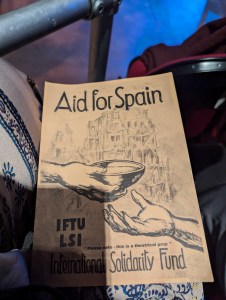
A theatrical prop
We are introduced the the BUF via a catchy dance number which may seem jarring until you watch a video of the militarised group marching in black and white newsreel clips. Many of the actors play multiple roles – including the leader of the BUF transforming into the Jewish pater familias, which may seem jarring until you realise that this is an intentional contrast.
The BUF organised a march to celebrate their formation fourth anniversary in October 1936, but rather than in wealthy Chelsea, where they formed, they wished to take their brand of hate through the heart of the East End. We see the build up to the resistance effort calling in the Communist Party to assist. This introduces the rousing “No Pasaran!” anthem.
Despite resistance, the march goes ahead and the Battle of Cable Street ensues. Ron from the North, has been convinced that he has the right to work that is perceived to have been stolen by immigrants, and has been provided with a smart BUF uniform. Sammy is spoiling for a fight, and Mairead is organised, determined and prepared. We feel the tension building.
The BUF had planned four sites around the East End for Mosley to speak but the resistance planned to prevent all of these. Tram drivers left their vehicles to create blockages and, in smaller streets, including Cable Street, barriers were erected of building materials and whatever residents could find and use. The plan had been for the BUF to march down major routes, with police enabling the march and keeping the resistance apart. However, once they attempted to enter Cable Street, the Battle ensued.
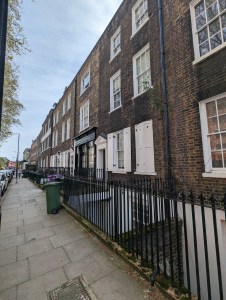
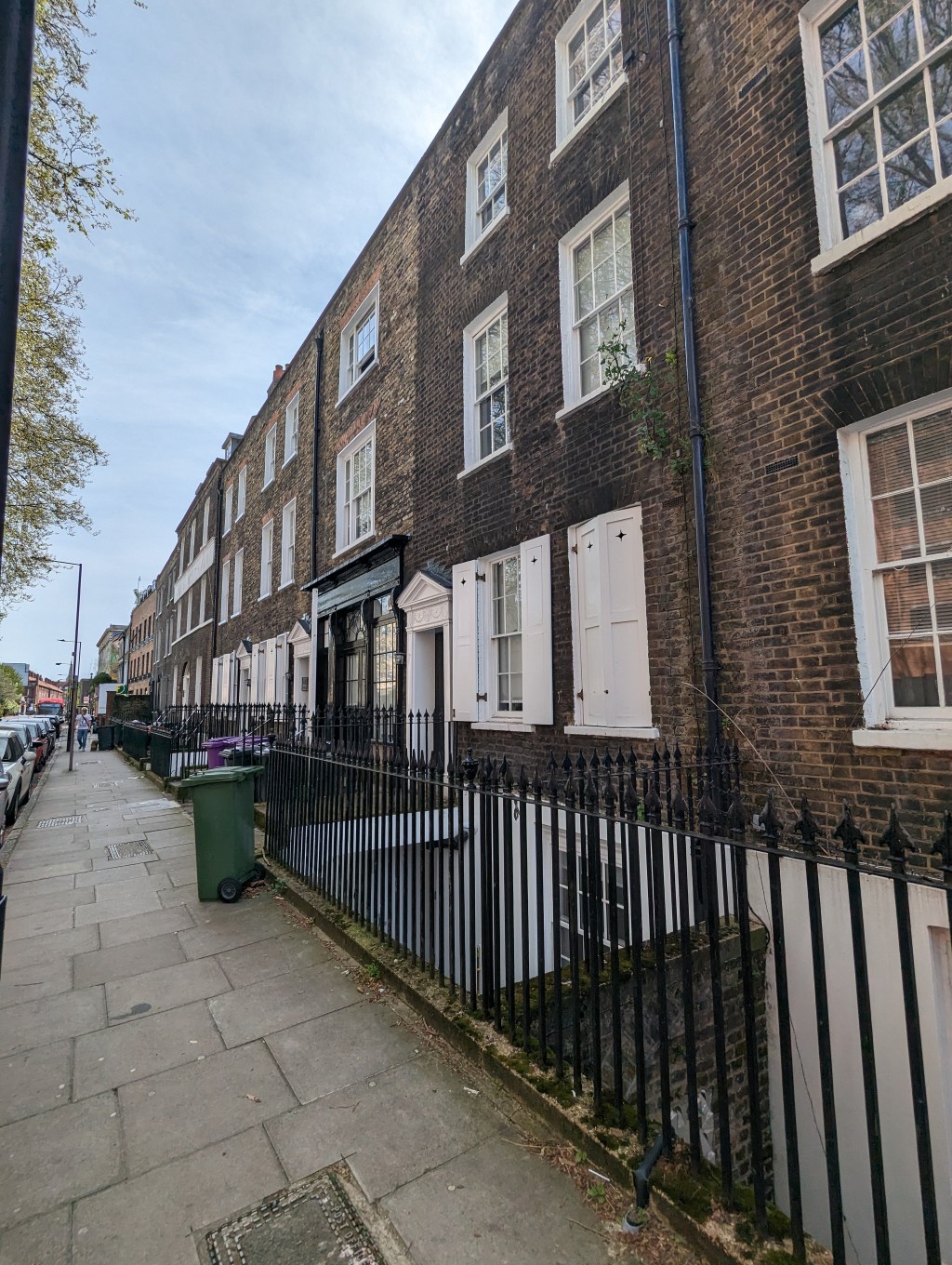
A walk along the real Cable Street
It is a challenging ambition to replicate a battle on such a huge scale with a cast of eleven actors and a puppet “Warhorse” style horse, but, we see the chaos and can imagine the rest.
The aftermath of the battle brings euphoria that the fascists were repelled but Ron soon realises that being a member of the BUF does not bring the privileges that he had hoped and he, his mother, and neighbours, are facing eviction from Camelot Mansions. They soon realise that unity is the solution.
Sammy signs up to fight the fascists in Spain, and Mairead has the offer of writing poetry in New York.
An East End heritage walking tour starts and ends the production, with modern day travellers exploring their ancestors’ stories. This resonates strongly with me as someone who has also travelled to explore my ancestry.
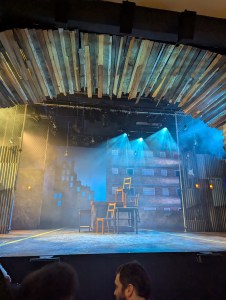
Cable Street the Musical at the Marylebone Theatre February 2026
The real Battle of Cable Street took place ninety years ago. Its message still resonates. We see the same tensions being played out now in the twenty first century, and it appears that we have not learned from the lessons of the past. The Musical, if nothing else, reminds us that harmony is better than discord, and that there is strength in unity. Being a good neighbour always matters, and remember that these are our streets.
 Awful Rigours and Wretched Pay
Leave a comment