
By Christine Swan
Smithfield and Farringdon are two historic regions of the City and I chose to stay here last weekend as a base for my visits to Open House properties. Refreshed after a hearty breakfast, I set off for day two of my engagement with this year’s festival. The weather was fine and bright when I headed off to the Sir John Soane’s Museum in Lincoln’s Inn. There was quite a queue outside but it was pleasant enough to wait in the warm sunshine for a few minutes. We were instructed to place our bags in a clear plastic carrier bag, which did concern me as the profile of my chest-worn sling bag, was considerably slimmer than when in a carrier bag. Nevertheless, this was the requirement and I was happy to comply.

A grand reception room in the Sir John Soane’s Museum
The museum itself is a time capsule, preserved from time of Soane’s death in 1837. Soane was a prolific architect responsible for a huge number of designs, including for his own home. A comprehensive list, in chronological order, can be found here. Sadly, not all of these plans were executed and some that were have been demolished.
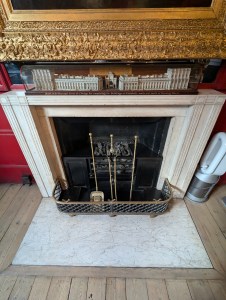
Soane’s designs for Whitehall buildings, on the mantlepiece of a very ordered fireplace
To visit this house is to glimpse inside the mind of Soane. It is labyrinthine, surprising, conventional, exotic, light, dark and macabre, all under the same roof. I am also partial to hanging on to things I love and can relate to a bit of Victorian clutter, but this museum takes it to a new level of collecting.
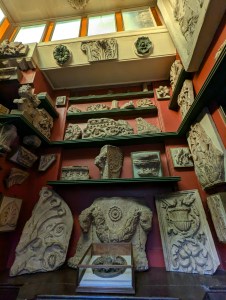
A comprehensive of architectural mouldings – collected for their own beauty and for inspiration
Some rooms are clearly laid out for receiving visitors, are sumptuously decorated and expansive, with ornate decoration and furnishings, designed to be shown off. I was particularly fond of the bright yellow morning room, which positively glowed on the sunny day of my visit.

The sumptuous yellow morning room
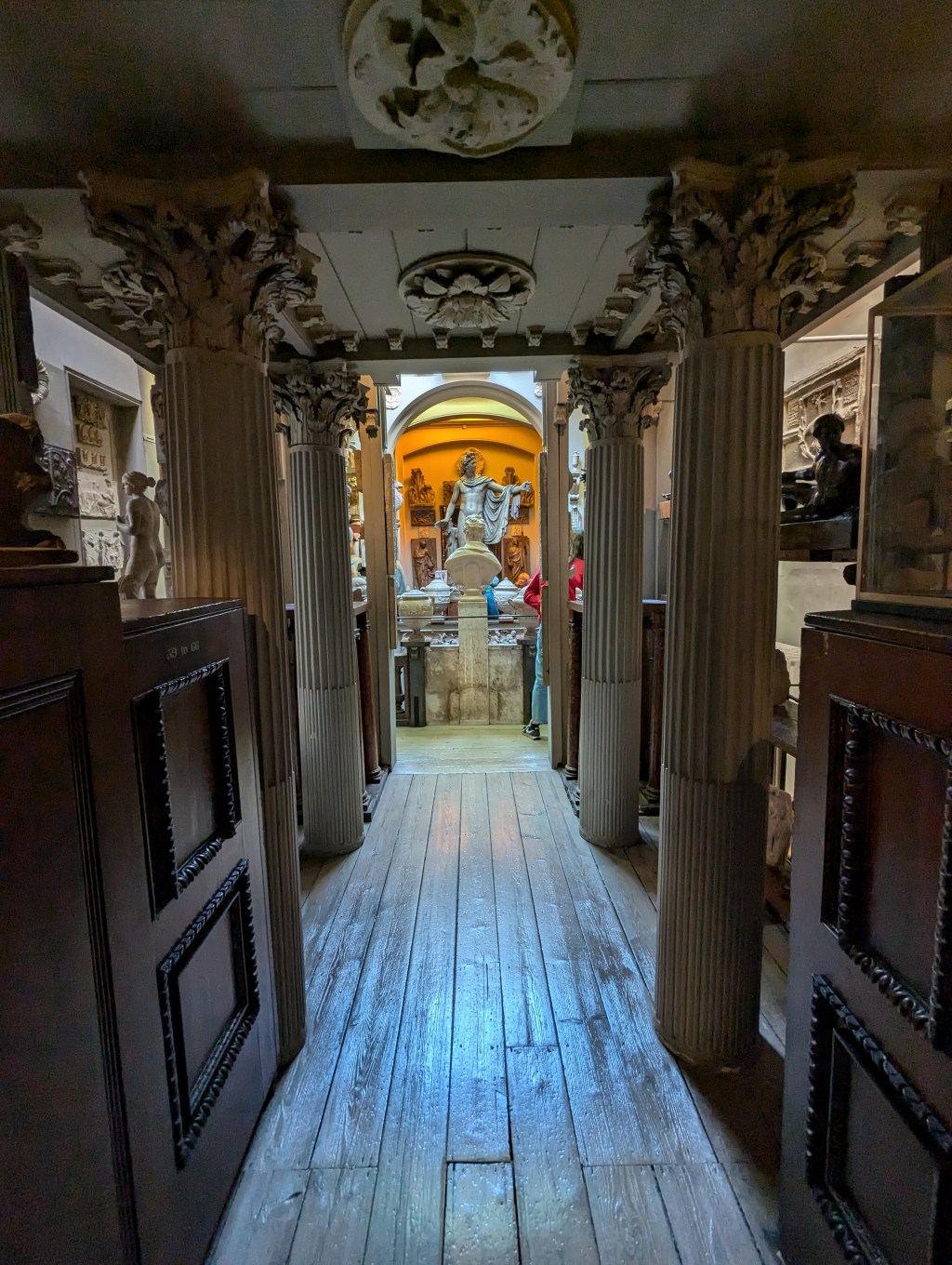
Go through a door and one enters an entirely different space, narrow, shadowy and filled with artifacts. Most dramatic of all, is a central column of light, surrounded by statuary, looking down upon the sarcophagus of the Egyptian Pharoah Seti I. I cannot begin to imagine how residents moved safely through the building by candlelight, but perhaps familiarity aided their passage. Every wall and corner is covered. Most pieces are very old and delicate so this is not a home for residents wedded to their feather duster and polishing cloths.

Hold onto your plastic bag closely – there are many delicate objects closely packed together!
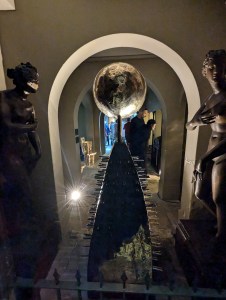
Visitors move, carefully, through a labyrinth of passages, filled with Soane’s original collection and the work of modern designers and artists currently being exhibited

Looking up, and down, is dizzying. Soane’s collection is extraordinary!
Walking back downstairs, I found myself in early Victorian kitchen with impressive range and dressers, but how minimalist it felt after my exotic travels above stairs!

The uncluttered, clean lines of the early Victorian kitchen are a real contrast to upstairs
After a quick stop in the museum shop, I walked across Lincoln’s Inn Fields enroute to my next site, the Inner Temple Gardens. Almost all of the entire Middle and Inner Temple complex was open to visitors for the Open House Festival, including churches, hall and gardens. A steady stream of admiring visitors wandered around the peaceful paths and streets that could have been a million miles away from the thundering traffic on the Embankment. Glorious dahlias in technicolour shades decorated the borders, an unusual collection of cycads was an unexpected find and the little greenhouse occupied by cacti and succulents was a delight. What a wonderfully peaceful place this is – it is indeed a hidden gem. I was informed by another visitor, that the gardens are open during the week but usually closed at weekends.
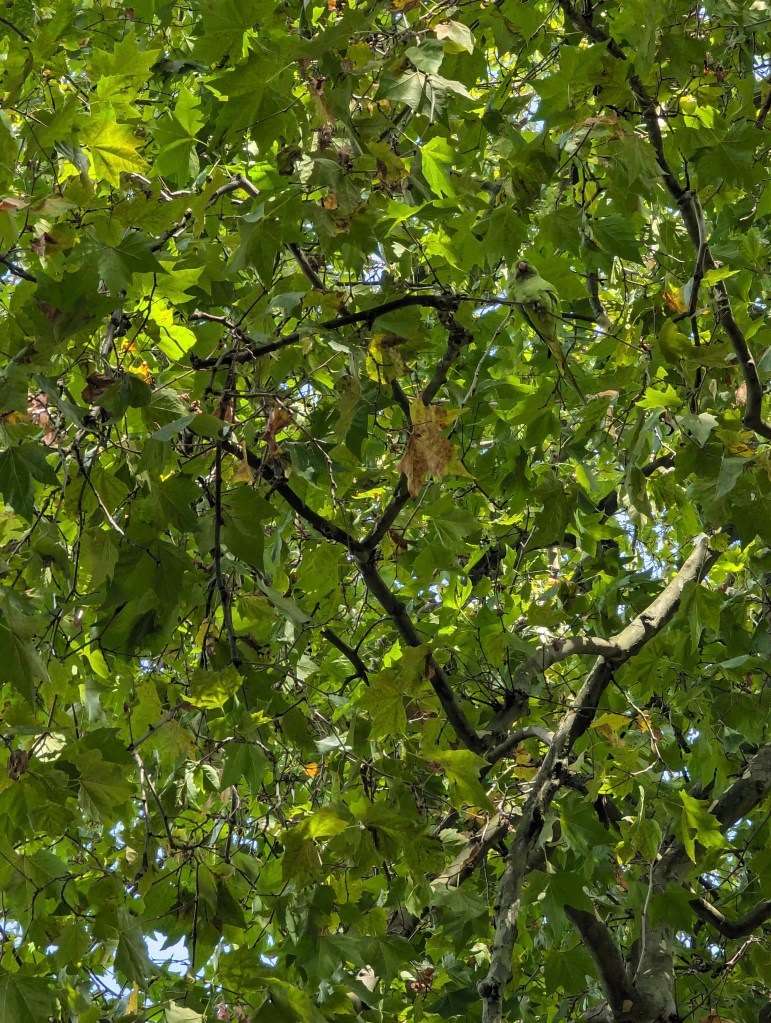
Spot the birdy in Lincoln’s Inn Fields

Stunning dahlias in full bloom in Inner Temple Gardens

The charming greenhouse housing a collection of cacti and succulents

A surprising find – a cycad

Stooks of cut grass used to increase biodiversity – interesting!
I walked through the maze of paths and, as in the best mazes, found a dead end before correcting my route to my next venue, which was 2 Temple Place. I have passed this particular building so many times that I was very pleased to be able to finally have a look around inside. This was the imagining of William Waldorf Astor who gave architects and designers the brief of designing an extravagant London base with no expense spared, dating from the early 1890s. The building is gothic in style and appears older than its 130 years. Entering the front door takes you into a world of wooden panelling, vast halls, impressive strongroom, marble floors, chandeliers, vast fireplaces and stained-glass, leaded windows. Everything about 2 Temple Place is opulent and expensive. The Astors were fantastically wealthy. William Waldorf Astor was known as the “landlord of New York” and was a property magnate. Yet all of his wealth did not bring him happiness. His marriage was allegedly an unhappy one and his childrens’ reflections were of a stern and austere father. Astor’s London base was not a happy, family home. As beautiful as it is, this was the opulent residence of a reclusive, widowed, very rich man. On the top of the roof is a weathervane with a golden galleon. Winds blew Astor from the US to the UK with all of his wealth on display in this building. It is now owned by the charity, the Bulldog Trust, as well as being open to the public so that we can all enjoy it. This feels like closing a very ornate circle.

Arriving at 2 Temple Place
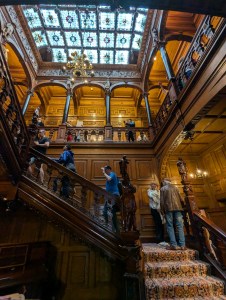
The impressive grand staircase

I wouldn’t have much to put behind these strong room doors, but William Waldorf Astor obviously did
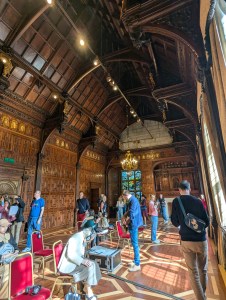
Incredibly ornate woodwork and stained glass windows in the magnificent upper hall
Thus my Open House Festival drew to a close. Looking at London’s buildings more closely, does cause you to see previously unnoticed features. As I walked back through Smithfield, I noticed the original brickwork on what I believe to be the Old Fish Market . The bricks were cut into shape to provide ornamentation and the closer I looked, the more impressed I was with the craftsmanship deployed on, what is essentially, an industrial building.

Smithfield Old Fish Market

Detail of carved brick on the Old Fish Market
I spent a thoroughly enjoyable and relaxing weekend visiting different sites that appealed to me. Fortunately, the weather was kind also, the sun shone and the temperature was pleasant. The aim of the Open House Festival is to promote an appreciation the diverse architecture of London as well as providing opportunities to visit sites that are not usually open to the public. Alas, despite entering ballots to tour 10 Downing Street and the BBC building, I had the same luck that I had with the Oasis ticket ballot. This did mean that I hung back from booking timed and ticketed visits until, for many popular sites, they were fully booked. Drop in visits do give the most flexibility. You can still add them to your itinerary and visit these sites in any order that suits you. This worked very well for me this year.

“The greenhouse is open – come in and take a peek.”
I am already looking forward to next year’s Festival in anticipation. I extend my hearty thanks to all hosts, volunteers and organisations that made Open House possible – bravo!
More information
Sites that were available in the Open House Festival 2024 – https://programme.openhouse.org.uk/
Sir John Soane’s Museum – https://www.soane.org/
The Inner Temple Garden – https://www.innertemple.org.uk/estate-garden/the-inner-temple-garden/
Two temple Place – https://twotempleplace.org/
Smithfield market is saved! By the Gentle Author – https://spitalfieldslife.com/2014/07/09/smithfield-market-is-saved/
 Awful Rigours and Wretched Pay
Leave a comment